Top-Rated Debt Collection Agency in Serbia
Your trusted debt collection agency in Serbia. Submit claims for prompt, trustworthy recovery. No upfront costs. Uncover Serbian debt collection methods in our comprehensive guide.






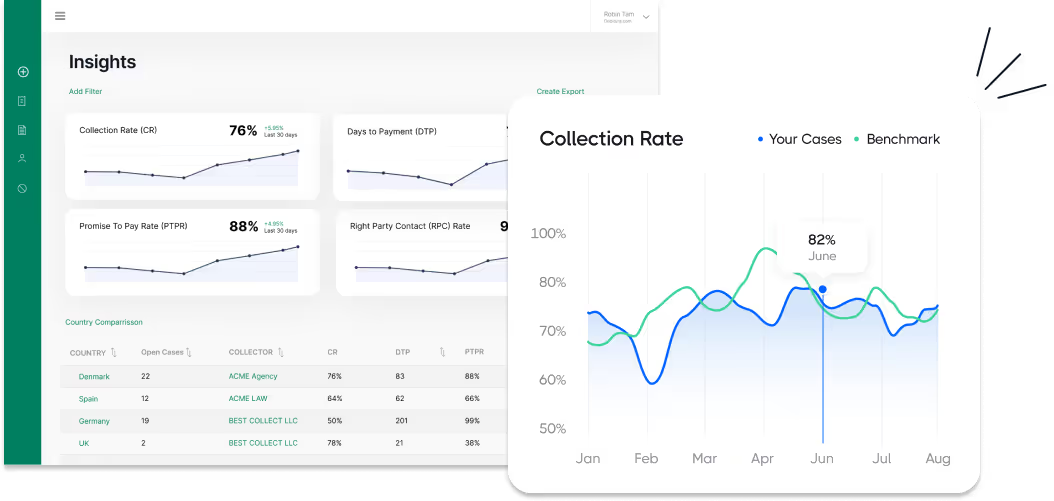

The ultimate guide about debt collection in Serbia
Why you can trust this guide
At Debitura, we uphold the highest standards of impartiality and precision to bring you comprehensive guides on international debt collection. Our editorial team boasts over a decade of specialized experience in this domain.
Questions or feedback? Email us at contact@debitura.com — we update this guide based on your input.
Debitura By the Numbers:
- 10+ years focused on international debt collection
- 100+ local attorneys in our partner network
- $100M+ recovered for clients in the last 18 months
- 4.9/5 average rating from 621 reviews
Expert-led, locally validated
Written by Robin Tam (16 years in global B2B debt recovery). Every page is reviewed by top local attorneys to ensure legal accuracy and practical steps you can use.
Contributing local experts:
Last updated:

For effortless debt collection in Serbia, get familiar with our comprehensive guide. Backed by Debitura's extensive local and international expertise, this simplified, digestible resource is your key to tackling delayed payments, promising a streamlined recovery process.
Understanding the Key Role Players in Serbia's Debt Recovery Landscape
Navigating Serbia's complex debt recovery arena requires a thorough understanding of the key role players involved. This includes debt collection agencies, bailiffs and lawyers, all critical contributors to a systemised effort to recover debts within Serbia's rigorous legal parameters.


Role of Debt Collection Agencies in Serbia
In Serbia, debt collection agencies operate at the forefront of the recovery process, initiated when debtors default on their financial obligations. These agencies step in before legal avenues are explored, engaging in pre-legal collection endeavors aimed at encouraging voluntary repayment. Strategies employed include direct negotiation, sending pre-legal notices, and employing mediation between the debtor and creditor, adhering to Serbian law to ensure fair treatment and protect consumer rights. While these agencies play a vital role in attempting to resolve debt issues amicably, their authority has boundaries. They are limited to non-coercive measures and cannot execute legal enforcement actions such as asset seizures, which require proceeding to judicial collection when negotiations fail. Involving a collection agency is often a creditor's first step, acting swiftly to recover debts while maintaining a professional relationship with the debtor.
The Role of Lawyers in Debt Recovery in Serbia
In the realm of debt collection in Serbia, the involvement of lawyers marks a crucial turning point, especially when pre-legal efforts have exhausted their potential. As stewards of legal expertise, lawyers in Serbia play a pivotal role in transitioning debt recovery efforts from negotiation tables to the courtrooms. They are instrumental from the moment creditors decide that legal action is necessary, often when amicable resolutions fail or when the debt amount surpasses thresholds suitable for out-of-court settlements. Lawyers adeptly handle the drafting and filing of lawsuit documents, ensuring adherence to procedural norms and regulations that govern debt recovery. Beyond document preparation, they serve as the creditor's voice in court, advocating on their behalf through nuanced arguments and strategic litigation. With their comprehensive understanding of the Serbian legal system and debt collection laws, lawyers not only aid in legal proceedings but also advise on the feasibility and potential outcomes of judicial collection efforts. Engaging a lawyer, therefore, becomes a strategic decision aimed at enhancing the likelihood of successful debt recovery while navigating the complexities of the legal system.
The Role of Bailiffs in Serbia's Debt Collection Process
In Serbia, the involvement of bailiffs, officially known as "public enforcement officers" (sudski izvršitelji), is a pivotal element in the landscape of debt collection. Empowered by the Law on Enforcement and Security, these legal professionals carry the authority to enforce court decisions and orders, ensuring that creditors are able to recover owed debts through a lawful and regulated process. The journey to engaging a bailiff often begins when pre-legal attempts to collect the debt fail, necessitating a move into the judicial realm for a resolution.
Prior to a bailiff's involvement, a creditor must secure an enforceable title—such as a court judgment or an authentic document that confirms the debt. This legal document serves as the foundation for initiating enforcement proceedings. Once obtained, the creditor can approach a public enforcement officer with a proposal for execution. The bailiff’s typical tasks involve asset seizure, garnishment of wages, and carrying out property evictions, amongst others. These tasks are conducted with a dual focus: to facilitate creditors in recovering their dues while upholding the legal rights of debtors, safeguarding against undue hardship. The overarching aim is to strike a judicious balance that accommodates the interests of all parties involved in the enforcement process.
Understanding Serbia's Debt Collection Legal Framework
Mastering Serbia's intricate debt collection regulations is crucial for effective recovery processes. Besides ensuring success, adhering to these laws embodies the fairness core to robust business ethics, fosters trust, and upholds business integrity.

.svg)
The Regulatory Environment and Civil Court System in Serbia
The Serbian civil court system plays a pivotal role in the collection of debts, structured to ensure justice through a well-defined hierarchical framework.
- Basic Courts: The foundational level of the judiciary, Basic Courts have jurisdiction over civil matters of lesser value and serve specific territories. They are where most debt collection cases start, especially if the disputed amount falls below a certain threshold.
- Higher Courts: Acting on appeals from Basic Courts and handling civil cases exceeding 40,000 euros, Higher Courts provide a second level of judgment. These courts also deal with more complex legal matters, including some debt recovery cases.
- Appellate Courts and the Supreme Court of Cassation: For further appeals, Appellate Courts oversee decisions from multiple Higher Courts. The Supreme Court of Cassation stands at the apex, resolving conflicts in legal interpretation and ensuring uniform application of laws throughout the system.
In summary, Serbia's civil court system offers a structured approach for creditors seeking debt recovery. Its hierarchical nature ensures thorough scrutiny at each level, with Basic Courts handling initial proceedings and escalated cases potentially reaching the Supreme Court of Cassation. For those navigating debt collection in Serbia, understanding this system is critical to successfully resolving disputes.
Key Legislation Impacting Debt Collection in Serbia
In Serbia, the legal landscape surrounding debt collection is multifaceted, involving several key laws and regulations that govern how debts are pursued, negotiated, and ultimately collected. This framework includes civil procedures, consumer protection, data protection, and bankruptcy laws, ensuring that the process is structured, efficient, and respects the rights of all parties involved.
- The Law on Enforcement and Security - Governs the enforcement of debts, outlining procedures for the seizure of assets and other enforcement measures to satisfy a debt.
- Law on Obligations - Details the various aspects of contractual obligations, including the conditions under which debts may arise and the rights of creditors and debtors.
- Bankruptcy Law - Regulates the financial restructuring or liquidation of insolvent debtors, establishing how outstanding debts are treated in bankruptcy proceedings.
In navigating the Serbian debt collection landscape, understanding these key pieces of legislation is crucial. Each law plays a unique role in defining the steps and strategies that can be employed during the debt collection process. Together, they provide a comprehensive legal framework that balances the need for effective debt recovery with protections for debtors. In practice, working with experienced legal professionals who are well-versed in Serbian law ensures that the debt collection process is conducted smoothly, respecting all legal requirements.
Consumer Protection from Unfair Collection Practices in Serbia
In Serbia, safeguarding consumers against unfair debt collection practices is handled with diligence, emphasizing respect for consumer rights even in debt recovery scenarios.
- Right to Object is a fundamental right where consumers can raise objections against enforcement decisions, especially in cases of suspected inaccuracies in billing or unjust obligations.
- Access to Legal Assistance is encouraged for consumers to navigate the complex terrain of debt collection and enforcement, including support from non-profit organizations such as CEP and Efektiva.
- Formal Legality Principle, which mandates enforcement officers to adhere strictly to the rule of law, curbing the potential for biased or unfair enforcement practices based on questionable calculations.
- Consumer Advisory Services, as promoted by organizations like Efektiva, provide crucial information on consumer rights, financial services, and protective measures against unfair practices.
- Protection against Interest and Additional Costs, ensuring that consumers are not unduly burdened with inflated demands beyond the principal amount owed.
The consumer in Serbia is not left defenseless in the face of debt collection. The legal framework and support systems in place offer significant safeguards against unfair practices, emphasizing the importance of awareness, timely action, and the pursuit of legal avenues to uphold consumer rights.
Navigating Amicable Debt Collection in Serbia
When managing debts in Serbia, understanding the amicable, or pre-legal, approach is crucial. This hassle-free, no-court alternative, frequently managed by collection agencies, delivers efficient results. Delving into this method's tactics, stages, and noteworthy considerations aids effective implementation.
- Statute of Limitations: 10 years for general obligations, 3 years for goods/services contracts.
- Fees and Interest Rates: Default interest and collection costs can be added, based on the National Bank of Serbia's rate.
- Essential Documents: Contracts, invoices, proof of delivery, and prior communications are crucial for validation and negotiation.
- Cost of Amicable Debt Recovery: Includes legal consultations and mediation services, with recent amendments aiming to limit creditor costs.
- Timeline for Amicable Debt Recovery: Varies significantly, with many cases resolving in weeks or months depending on debtor responsiveness.
- When to Use Amicable Debt Recovery: As an initial, less adversarial step, effective in maintaining business relations while securing payment.
- When to Transition to Judicial Debt Recovery: Upon repeated negotiation attempts’ failure, debtor unresponsiveness, or statute of limitations expiration.
- Negotiation and Settlement: Creditors should offer flexible settlement options, such as installment plans or reduced lump-sum payments.
- Legal and Regulatory Framework: Governed by laws ensuring fair practices, including limitations, interest rates, and rights of both parties.
- Consumer Protection: Harassment, intimidation, and coercion are prohibited, with regulations protecting consumers from abusive collection tactics.
Navigating Amicable Debt Collection in Serbia
In Serbia, amicable debt collection focuses on preserving the relationship between the creditor and debtor, while effectively managing to recover due payments. The approach is relationship-centric, leveraging negotiation and communication rather than jumping straight to legal proceedings. This method is particularly beneficial for non-disputed claims, where the emphasis is on finding a fair and manageable solution for all parties involved. Serbia's legal framework supports this non-confrontational method, making it a recommended first step for creditors.
The Effective Role of Collection Agencies in Amicable Procedures
When it comes to the amicable recovery of debts in Serbia, collection agencies like Debitura play a vital role. Our expertise lies in accurately identifying the particulars of each debt situation, followed by initiating diplomatic communication with debtors. This professional mediation, grounded in a deep understanding of Serbian debt collection laws and consumer protection guidelines, often leads to more successful debt recovery outcomes. Our approach respects both the debtor's rights and the creditor's needs, leading to resolutions that are fair and sustainable.
Advantages of Amicable Debt Resolution in Serbia
This amicable path offers significant advantages. For creditors, it means saving on potential legal costs and preserving business relationships that could otherwise be strained by legal conflict. Debtors benefit from more flexible repayment plans, reducing financial stress and potentially negative views of the creditor. This strategy underscores mutual respect and understanding, fostering a positive environment for meeting financial obligations.
Knowing When to Transition from Amicable to Judicial Collection
While amicable solutions are always preferred, there are situations where legal collection in Serbia becomes necessary. Indications for such a shift include a lack of response from the debtor, repeatedly broken promises, or deliberate attempts to evade repayment. Switching to legal proceedings is a significant step, involving greater costs and time. As such, it's typically considered after all amicable avenues have been thoroughly explored.
Streamlined and Cost-Efficient Amicable Debt Collection with Debitura
At Debitura, we streamline the amicable debt collection process in Serbia with our clear, no-success, no-fee policy. Without any setup fees or subscriptions, our clients only incur a success fee upon the successful recovery of funds. The process, usually spanning 2-3 months, is transparent and efficient—beginning with account setup and claim submission, followed by real-time progress tracking. Should amicable collection not resolve the issue, we guide clients towards exploring legal avenues, providing quotes from local attorneys to ensure informed decision-making.
Opt for Debitura's expertise to navigate the intricacies of amicable debt collection in Serbia, ensuring an approach that's respectful, efficient, and effective.
Navigating the Terrain of Judicial Debt Collection in Serbia
When friendlier methods of debt recoveries fail, the pursuit for claim elevates towards legal enforcement through judicial debt collection. This engrosses obtaining a court order, bailiff involvement, and unless it's a minute claim, essential legal intervention. We delve into an in-depth exploration of Serbia's specific judicial debt collection process here.
- Hierarchical Court System: Serbia operates a multiple-level court system, ensuring specialized handling of debt recovery cases.
- Debt Collection Laws: The Law on Enforcement and Security outlines the legal framework for debt collection, highlighting the role of legal professionals.
- Consumer Protection: Efforts are in place to ensure fair treatment during debt collection and recourse for consumers against unfair practices.
- Judicial Debt Collection Process: Involves pre-legal methods, court proceedings, and potentially, enforcement through asset seizure.
- Court Order for Unpaid Debt: Involves legal proceedings initiation, asset verification, and engaging in settlements if feasible.
- Small Claims Court: Handles small claims efficiently, with basic and higher courts designated based on the claim size.
- Choosing the Right Court: Based on dispute value and case characteristics, ensuring efficient debt recovery processes.
- Court Fees and Legal Procedures: Understanding associated fees and legal procedures is crucial for debt recovery through Serbia's courts.
- Timeline for Legal Proceedings: From initiating a lawsuit to enforcing judgments shows the progression of judicial debt collection.
- Public Enforcement Officers: Play a vital role in executing court orders for debt recovery, with costs reimbursable from the debtor.
Shifting from Amicable to Judicial Debt Collection in Serbia
In Serbia, the transition from amicable to judicial debt collection occurs when earlier negotiations and attempts at voluntary settlement fail. This point is often reached in cases of disputes or if the debtor refuses to comply with payment requests, necessitating more formal legal interventions. Legal representation becomes paramount during this phase, as navigating the complexities of the judicial system and ensuring the proper legal proceedings are followed require expertise and experience in Serbian law.
The Importance of a Formal Judgment in Serbia
A court order is a formal judgment issued by a court that validates a creditor's claim against a debtor and allows for legal enforcement of the debt. Obtaining a court order is a crucial step in the judicial debt collection process in Serbia, as it provides a legal basis for measures such as property seizure, wage garnishment, and bank account levies to recover the debt. To obtain a court order, the creditor must file a lawsuit against the debtor, providing evidence of the owed debt and any previous attempts at collection. The issuance of a court order not only legitimizes the creditor's claim but also activates the procedural mechanism for enforcing payment.
Determining the Appropriate Court in Serbia
The decision on which Serbian court will handle a debt collection case is determined based on several criteria, including the claim's size, complexity, and the debtor’s domicile. Basic Courts generally handle minor claims and disputes, while Higher Courts deal with larger, more complex cases, particularly where the dispute value exceeds 40,000 euros. In the context of commercial disputes, specialized Commercial Courts may be involved. Additionally, the territorial jurisdiction plays a critical role, typically based on the defendant’s residence or headquarters. Therefore, understanding these criteria and selecting the appropriate legal venue is crucial for the efficient and effective resolution of debt collection cases in Serbia.

Small Claims Court in Serbia
In Serbia, while there isn't a specific "Small Claims Court" akin to those found in some other jurisdictions, the judicial system is designed to efficiently handle lower-value claims, usually through basic courts. These courts are typically responsible for dealing with disputes involving smaller financial amounts and are designed to enable a more streamlined and cost-effective process for claimants. Unfortunately, detailed limitations regarding the specific value caps for cases that can be considered under this streamlined process were not provided in the available facts. However, this system is part of Serbia's broader judicial framework that includes basic courts, higher courts, commercial courts, misdemeanor courts, and the Supreme Court of Cassation. These courts handle various cases based on the nature of the claim, jurisdiction, and other factors. For international creditors, understanding how to navigate this system with the assistance of legal professionals, like those from Debitura, can significantly enhance the efficiency and success rate of debt collection in Serbia.
Ordinary Proceedings in Serbia
In Serbia, besides the option of the small claims procedure for relatively smaller disputes, there exist ordinary proceedings that are suited for more substantial and complex cases. Unlike small claims courts, which are designed for expediency and typically handle matters of lower value, ordinary proceedings allow for a more thorough investigation and presentation of cases. These proceedings typically involve a higher level of legal scrutiny and the ability to handle disputes over larger sums. Legal representation is not only advisable but a practical necessity in these proceedings, given the complexity and the stakes involved.
The governing legal framework for ordinary proceedings is detailed in the Law on Civil Procedure, which outlines the procedural rules and requirements for bringing a civil case to court. This includes the submission of a formal lawsuit, the exchange of evidence, and the presentation of arguments before the court. One of the key advantages of this route is the potential for a more comprehensive examination of the dispute, including detailed evidence assessment and full legal argumentation, offering a path to justice for more complex and high-value disputes.
Understanding the Process of Debt Enforcement in Serbia
Once a court order has been obtained in Serbia to collect a debt, it empowers the creditor with the right to enforce the decision. This phase, known as debt enforcement and managed by official bailiffs, enables creditors to seize the debtor's assets, guaranteeing the satisfaction of their claims.
- Governing Law: The Law on Payment Transactions governs debt enforcement, outlining procedures and debtor's account actions.
- Regulatory Oversight: The National Bank of Serbia plays a crucial role, instructing banks on account freezes and fund allocations.
- Protected Accounts: Some accounts and funds, like donations and insurance proceeds, are exempt from enforcement actions.
- Role of Lawyers: Integral in submitting execution proposals to courts and facilitating direct bank transfers from debtor to creditor.
- Court Involvement: Enforcement based on court or arbitration decisions, involving public enforcement officers for monetary claims execution.
- Documentation Requirement: Valid invoices, contracts, and court judgments are requisite for initiating enforcement procedures.
- Debtor Impact: Enforcement actions can result in account restrictions and seizure of funds to settle obligations.
- Statute of Limitations: Court enforcement officers can collect debts within a ten-year period, reinforcing the longevity of enforceable decisions.
- Asset Seizure Criteria: Governed by the Law on Confiscation of Assets Derived from Criminal Offenses, detailing conditions and procedures.
- Garnishment Adjustments: The Law on Enforcement and Security introduces proportionality in garnishments, aiming to protect the debtor's minimum living standards.
The Legal Pathway to Debt Enforcement in Serbia
In Serbia, the enforcement of debts takes its legal basis from the Law on Enforcement and Security, which governs the mechanisms through which creditors can claim their rights against debtors. This intricate legal framework outlines the entire process, from the identification of the debtor's assets to their eventual seizure and sale. A crucial element in this procedure is the issuing of an enforceable title, such as court judgments, which forms the legal ground for initiating enforcement actions.
Key Actors in the Serbian Debt Enforcement Process
Public enforcement officers, also known as sudski izvršitelji (court enforcement agents), play a pivotal role within the Serbian judicial system's framework for debt recovery. Empowered with the authority to enforce debts within a notable ten-year statute of limitations, their responsibilities include not only the seizure and liquidation of debtor's assets but also mediating between involved parties to ensure lawful and efficient proceedings. Their actions are aimed at balancing the creditor's need for recovery and the debtor's right to protection from undue hardship.
Considerations and Costs Involved in Debt Enforcement
The process of enforcing a debt judgment in Serbia involves various financial considerations, including court fees, bailiff charges, and potential legal representation expenses. It's crucial for creditors to be aware that these costs can fluctuate based on the complexity and duration of the enforcement procedure. Understanding this legal landscape and preparing adequately can significantly impact the effectiveness and efficiency of debt recovery efforts.
Preparatory Steps for Effective Enforcement
A foundational element of Serbia's debt enforcement framework is the requirement for creditors to possess a valid, enforceable title, serving as irrefutable evidence of the debtor's obligation. In many cases, creditors are advised to take pre-legal actions such as issuing final payment demands, giving debtors an opportunity to settle their dues voluntarily before the initiation of formal enforcement procedures. This phase is instrumental for setting the legal grounds for action, whilst safeguarding the rights of the debtor to raise objections or challenge the enforcement attempt — an important aspect of ensuring fairness and transparency in the legal process.
Decoding Debt Recovery Through Insolvency Proceedings in Serbia
Insolvency, a situation where debtors find themselves incapable of fulfilling their financial debts as and when they fall due, often leaves traditional enforcement approaches, such as asset confiscation by court orders, fruitless. This is primarily due to the lack of assets available for recovery. When faced with such scenarios, insolvency proceedings become an essential tool. These formal proceedings aim at methodically liquidating the debtor's assets, providing the final line of strategy to retrieve any possible compensation for unresolved claims.
- Types of Proceedings: Bankruptcy in Serbia includes liquidation and reorganization.
- Key Participants: Involves the court, bankruptcy trustee, creditors' assembly, and creditors' committee.
- Bankruptcy Trustee: Appointment emphasizes criteria for impartiality and professionalism.
- Payment Hierarchy: Establishes an order for creditors to recover claims from the bankruptcy estate.
- Secured Creditors: Have specific protections to fulfill contracts and recover claims post-bankruptcy.
- Legal Implications: Transfer of rights to the bankruptcy trustee, cessation of interest on unsecured claims.
- Court System: Bankruptcy cases are likely handled by commercial courts, with appeals potentially reaching the Supreme Court of Cassation.
The Framework of Insolvency Procedures in Serbia
In Serbia, insolvency procedures serve as a crucial framework for managing cases in which debtors find themselves unable to fulfill their financial commitments. Governed by robust legislation, these procedures aim at either restructuring the debtor’s financial affairs through reorganization or dissolving assets to settle debts with creditors. This structured approach can be initiated by either the debtor themselves or the creditors, contingent on specific conditions being met, such as a persistent inability to pay or over-indebtedness.
Creditor Rights and Claim Prioritization in Serbia
The insolvency proceedings in Serbia structure claims into distinct categories, dictating their prioritization for repayment. From secured claims, protected by collateral, to unsecured claims without such security, the classification has a direct impact on creditors' recovery prospects. It is vital for creditors to promptly register their claims within the judicially stipulated deadlines to safeguard their interests. Participation in creditor committees and active engagement in negotiating reorganization plans can further augment their likelihood of recovery.
Understanding Costs and Timelines
Delving into insolvency proceedings in Serbia incurs various costs ranging from court fees and administrative charges to expenses for legal representation. These costs are typically allocated from the debtor’s estate before any creditor settlements. The duration of insolvency cases in Serbia can vary greatly, influenced by the complexity of the debtor’s financial situation, the number of creditor claims, and the possibility of legal disputes. Creditors should brace for potentially prolonged proceedings, which might extend the timeframe for achieving debt recovery.
Find a Local Debt Collection Lawyer
Need court-ready representation? Share your case once and receive up to three proposals from vetted litigation attorneys—free, fast, and with no commitment.
- Verified specialists
- Quotes in 24 h, no hidden fees
- Fair, pre-negotiated rates
Stojkovic Attorneys is a premier law firm in Belgrade, offering effective debt collection services in Serbia; founded in 1965, the firm is recognized for its inclusion in ICLG’s Corporate Investigations Guide and serves clients across the Balkans with transparent pricing and trusted legal expertise.
.webp)
.png)

.png)

Petrovic Mojsic & Partner is a premier law firm in Belgrade offering effective Debt Collection services in Serbia, positioning itself as the go-to partner for debt recovery with a strong reputation since 2011 and recognized for its industry accolades and memberships.
NCR Lawyers is a premier law firm in Belgrade offering effective Debt Collection services in Serbia, positioning the firm as the go-to partner for debt recovery, founded in 2020 and recognized for its awards and memberships.
Injac Attorneys is a premier law firm in Belgrade offering effective Debt Collection services in Serbia, positioning the firm as the go-to partner for debt recovery since 2019, with memberships in the International Bar Association and serving Southeast Europe.
Frequently Asked Questions
Explore our most common FAQs below—or reach out directly at contact@debitura.com if you need help with a specific case.
.svg)





.svg)